
Warm water, consistent waves and hundreds of miles of tropical coastline have made Costa Rica one of the world’s favorite surf destinations. From the laid-back beach towns of Guanacaste and the Nicoya Peninsula to the powerful breaks of the southern Pacific coast, there’s a wave — and a place to stay — for almost every kind of traveler.
This guide covers the essentials for planning a Costa Rica surf trip, including where to surf, when to go, where to stay, how to get around and what to know before hitting the water.

Costa Rica packs an impressive variety of waves into a relatively small stretch of coastline. Most of the country’s best-known surf breaks are found along the Pacific coast, where consistent swells, warm water, and a mix of beach, reef, and point breaks create options for almost every level of surfer.
Choosing where to surf often comes down to more than wave quality. Some towns offer easy beach access and a lively social scene, while others are better suited to travelers looking for quieter beaches, fewer crowds, or more challenging conditions. These are some of the Costa Rica surf destinations worth knowing before planning your trip.
Playa Guiones is one of Costa Rica’s most recognizable surf beaches and a major reason travelers make their way to Nosara. Its long stretch of sandy coastline offers multiple peaks rather than a single crowded takeoff point, with conditions that can work for both newer surfers and more experienced riders.
Nosara has developed into a well-established surf destination without losing its connection to the surrounding nature. Surf schools, board rentals, hotels, restaurants, and wellness-focused businesses are easy to find, making Playa Guiones particularly convenient for travelers who want to build most of their trip around the beach.
Tamarindo is one of the easiest Costa Rica surf towns to plan a trip around. The town has a large selection of accommodation, restaurants, surf schools, board rentals, and nightlife, while several surf breaks can be reached in and around the area.
The main beach can provide approachable conditions for beginners, while nearby breaks give more experienced surfers additional options when conditions change. Its location in Guanacaste and relatively convenient access from Liberia also make Tamarindo a popular first stop on a Costa Rica surf trip.
Santa Teresa combines consistent Pacific surf with the atmosphere of a small but increasingly popular beach town. Long beaches and multiple breaks give surfers room to explore, while the town offers everything from simple hostels and surf camps to boutique hotels and upscale restaurants.
Roads and transportation can make getting around feel more adventurous than in some of Costa Rica’s larger resort towns, but that is also part of Santa Teresa’s appeal. It works particularly well for travelers who want surfing to be the center of the trip while still having plenty to do after leaving the water.
Jacó is one of the most accessible surf destinations from San José and provides a convenient base for exploring Costa Rica’s Central Pacific coast. The town itself has plenty of accommodation, restaurants, shops, and nightlife.
Just south of Jacó, Playa Hermosa is known for faster and more powerful waves and is generally better suited to experienced surfers. The contrast between the two areas makes this part of the coast useful for groups where surfers have different experience levels.
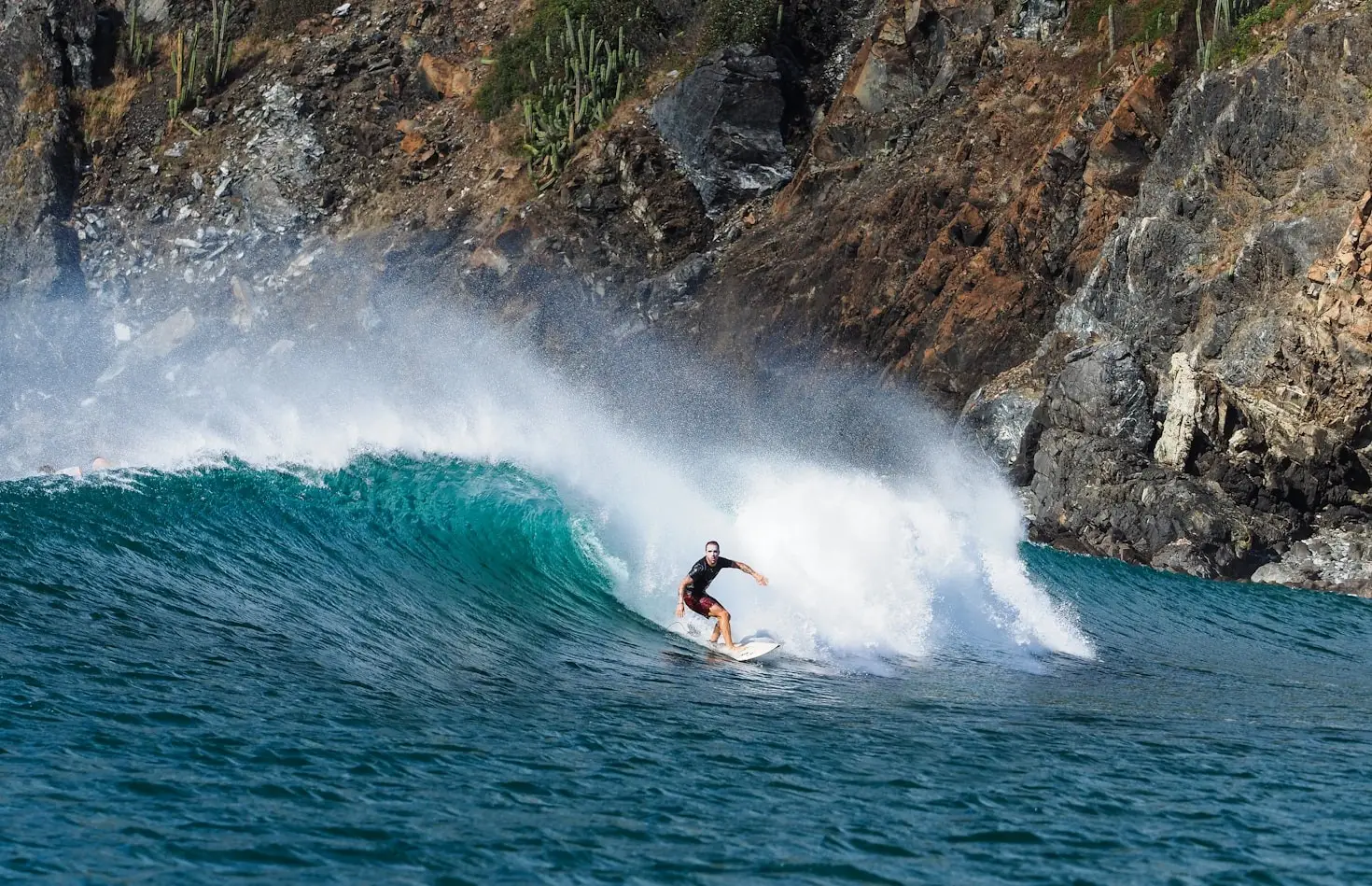
Farther south, Dominical has built its reputation around a powerful beach break and a relaxed surf-town atmosphere. The waves can become heavy when the swell increases, so conditions are often better suited to intermediate and advanced surfers.
The surrounding southern Pacific region is also worth exploring away from the water, with rainforest, waterfalls, wildlife, and quieter beaches making Dominical a good base for travelers who want more than a surf-only vacation.
Pavones sits much farther south and requires more effort to reach, but it has one very good reason for attracting surfers: its famous long left-hand point break. When the swell and conditions line up, rides can be exceptionally long.
Because of its remote location, Pavones is a different experience from destinations such as Tamarindo or Jacó. It makes more sense for experienced surfers willing to travel farther in search of a particular wave than for someone looking for the easiest first Costa Rica surf vacation.
Costa Rica’s Caribbean coast offers a completely different surf experience. Puerto Viejo is the best-known base, with tropical scenery, a distinct Caribbean culture, and several breaks in the surrounding area.
Surf conditions here follow different weather and swell patterns from the Pacific, so timing becomes particularly important. Experienced surfers may also know the area for Salsa Brava, a powerful reef break that should not be treated as a beginner wave.
Costa Rica is a year-round surf destination, but the experience can change considerably depending on the coast, season, and type of waves you are looking for. The Pacific coast has a clearly defined dry and green season, while the Caribbean follows a different weather and swell pattern altogether.
For many travelers, the best time to visit is a balance between wave size and weather. The dry months generally bring sunnier days and easier travel conditions, while the green season brings more consistent south and southwest swells to much of the Pacific coast. That means beginners, experienced surfers, and travelers combining surfing with a wider Costa Rica vacation may each prefer a different time of year.
Costa Rica’s Pacific dry season generally runs from December into April. These months bring less rainfall and plenty of sunny weather, making them particularly attractive if surfing is only one part of your trip.
Pacific swells are generally smaller than during the green season, although there are still plenty of surfable days and the northern Pacific can pick up swell from the north. The combination of more manageable waves and better weather can make this period a good choice for beginners and intermediate surfers. It is also a popular tourism season, so well-known beach towns and accommodation can be busier.
The green season is when the Pacific coast becomes particularly interesting for surfers chasing more consistent and powerful waves. Southern Hemisphere swells become more frequent, with many Pacific breaks seeing their strongest surf during this part of the year.
Rain is part of the trade-off, but it does not necessarily mean entire days are washed out. On much of the Pacific coast, rainfall commonly arrives later in the day, leaving opportunities for morning surf sessions. July and August can also see a relative reduction in rainfall known locally as veranillo, or “little summer.” September and October tend to be among the wetter months on the Pacific side.
For intermediate and advanced surfers whose priority is finding stronger Pacific swell rather than guaranteed sunshine, the green season can be one of the most rewarding times to visit.
The Caribbean coast should be considered separately from the Pacific. Its climate and swell patterns are different, and Puerto Viejo and the surrounding breaks can become particularly active when north and northeast swells arrive during the Northern Hemisphere winter.
This can produce powerful conditions at breaks such as Salsa Brava, while the region also has more approachable beach breaks. Because Caribbean conditions are less closely tied to the Pacific surf calendar, checking the forecast for the specific destination is particularly important when planning a trip around this coast.
There is no single perfect month for everyone. As a simple starting point:
December–April → better if you prioritize sunshine, easier travel and generally more approachable Pacific conditions.
May–November → better if your priority is more consistent and larger Pacific swell.
Northern Hemisphere winter → worth watching if your trip is focused on the Caribbean coast.
And regardless of season, check the local surf forecast before entering the water. Conditions at the same beach can change dramatically with swell direction, tide and wind.
Not every surf town in Costa Rica offers the same kind of trip. Some are ideal for beginners, some are better for experienced surfers chasing stronger waves, and others are more about nightlife, wellness, nature, or a quieter beach atmosphere.
Choosing the right base can make a big difference, especially if you plan to stay in one place for several days rather than move constantly between destinations.
Tamarindo and Playa Guiones are two of the easiest destinations for first-time surf travelers. Both have plenty of surf schools, board rentals, accommodation, restaurants, and services close to the beach.
Playa Guiones is especially popular because of its long sandy beach and multiple peaks, while Tamarindo offers a more developed town atmosphere with nightlife and a wide range of hotels and restaurants.
Nosara works well for travelers who want surfing to be part of a slower, more relaxed trip. The area combines consistent waves with yoga studios, wellness retreats, restaurants, and a strong focus on nature.
It can also be a good choice for couples or groups where not everyone plans to spend the entire day in the water.
If you want plenty to do after the sun goes down, Tamarindo and Jacó are among the more active surf towns in Costa Rica. Both have large selections of bars, restaurants, shops, and accommodation.
These destinations are also practical for shorter trips because they offer many services in one place and relatively easy access to nearby beaches and surf breaks.
More experienced surfers may prefer areas known for stronger and more demanding waves. Playa Hermosa near Jacó can produce powerful beach-break conditions, while Dominical is known for consistent surf along the southern Pacific coast.
Pavones is much more remote, but its famous left-hand point break can make the extra travel worthwhile when conditions line up.
Santa Teresa has grown significantly in recent years, but it still offers a different atmosphere from larger resort towns. Farther south, destinations around Dominical, Uvita, and the Osa Peninsula provide an even stronger sense of nature and distance from Costa Rica’s busiest tourism areas.
These areas can be particularly appealing if your trip includes wildlife, waterfalls, rainforest, or quieter beaches alongside surfing.
If this is your first trip to Costa Rica, choosing a destination with easy access to accommodation, surf rentals, restaurants, and transportation can make the experience much simpler. More experienced travelers may prefer to explore smaller towns or combine several surf regions during one trip.
The best choice ultimately depends on your surfing level, budget, preferred atmosphere, and how much time you want to spend traveling between destinations.
Getting to Costa Rica is relatively straightforward, with international flights arriving throughout the year and two main airports serving most travelers. Choosing the right airport can save several hours of driving, especially if your trip is focused on a particular surf region.
The two main international airports are Juan Santamaría International Airport (SJO), near San José, and Guanacaste Airport (LIR), near Liberia. Both receive international flights, including regular connections from major cities in the United States.
Located near San José in the center of the country, SJO is Costa Rica’s busiest international airport and a useful arrival point for travelers heading toward the Central and Southern Pacific coasts.
Jacó and Playa Hermosa are among the more accessible surf destinations from SJO. Travelers continuing farther south toward Dominical, Uvita, or the Osa Peninsula can also use San José as their starting point.
SJO can also make sense if your itinerary includes destinations in the Central Valley or if you plan to travel across several different regions rather than spend the entire trip on one section of the coast.
Guanacaste Airport, commonly known by its airport code LIR, is located near Liberia in northwestern Costa Rica. For surf trips focused on Guanacaste and the northern Nicoya Peninsula, it can be considerably more convenient than flying into San José.
Tamarindo is one of the best-known surf destinations within relatively easy reach of LIR. The airport is also a useful gateway for other beaches along the Guanacaste coast.
Travelers heading toward Nosara and Playa Guiones may also prefer LIR depending on flight availability, transportation plans, and road conditions.
The best airport usually depends on where you plan to spend most of your trip. If Tamarindo, Nosara, Playa Guiones, or northern Guanacaste are your main destinations, LIR is often the more practical choice.
For Jacó, Playa Hermosa, Dominical, and much of the Central or Southern Pacific coast, SJO will often make more sense.
If you are visiting several parts of Costa Rica, it is worth comparing both airports before booking. In some cases, arriving at one airport and departing from the other can reduce unnecessary driving and make a longer coastal itinerary easier to plan.
Once you arrive, the main options for reaching the coast are rental cars, private transfers, shared shuttles, buses, and domestic flights. The best option depends on your budget, destination, and how much freedom you want during the trip.
A rental car provides the most flexibility if you plan to visit several beaches or carry surfboards, while private and shared shuttles can be easier for travelers staying primarily in one surf town.
It is important not to judge travel times by distance alone. Costa Rica’s mountainous terrain, road conditions, weather, and traffic can make relatively short distances take longer than expected. Give yourself extra time when traveling between the airport and the coast, particularly during the rainy season or when catching a departing flight.
Getting around Costa Rica is part of the adventure, but travel can take longer than it appears on a map. Mountain roads, river crossings, traffic, construction, and seasonal weather can all affect journey times. If you plan to visit several surf towns, choosing the right transportation can make a significant difference to your trip.
Rental cars offer the most freedom, while shuttles and private transfers are convenient for travelers who plan to stay in one or two destinations. Domestic flights can also save time when traveling between distant parts of the country.
A rental car is one of the most flexible ways to explore Costa Rica, particularly if you want to visit beaches and surf breaks outside the main towns. Having your own vehicle also makes it easier to travel early in the morning, carry equipment, and change plans when surf conditions are better somewhere else.
Major rental companies operate around both SJO and LIR airports, as well as in several popular tourist destinations. When comparing prices, check what insurance and mandatory charges are included rather than choosing a vehicle based only on the advertised daily rate.
If you are carrying surfboards, consider the size of the vehicle and how the boards will be transported before booking. A small car may be perfectly adequate for a simple hotel-to-beach trip but less practical for a longer surf road trip.
You do not need a 4×4 for every Costa Rica vacation. Many major destinations are connected by paved roads and can be reached with a standard vehicle, particularly during the dry season.
However, a higher-clearance vehicle can be useful when exploring more remote beaches or traveling on unpaved roads. Conditions can change considerably during the green season, when heavy rain may create potholes, mud, or more difficult sections of road.
If your accommodation is outside a main town, ask the property about current road conditions before choosing a rental vehicle. Local advice is often more useful than assuming that every coastal destination requires four-wheel drive.
If you would rather not drive, shared shuttles connect many of Costa Rica’s major tourism destinations. They can be a convenient option for traveling between the airport and popular surf towns such as Tamarindo, Nosara, Jacó, and Santa Teresa.
Private transfers cost more but provide additional flexibility, particularly for families, groups, or travelers carrying a lot of luggage. They can also be useful after a long international flight when you would rather not immediately deal with unfamiliar roads.
For a trip based almost entirely in one walkable beach town, using a shuttle or private transfer can eliminate the need to rent a car for the entire vacation.
Domestic flights can dramatically reduce travel time between San José and some of Costa Rica’s more distant coastal regions. Small regional airports serve several popular tourism areas, making flying worth considering when time is more valuable than having a vehicle for the journey.
Baggage allowances on small aircraft can be more restrictive than on international flights, so surfers traveling with boards should check current luggage and sporting-equipment policies before booking.
Public buses are generally the least expensive way to travel around Costa Rica and connect San José with towns throughout the country. They can work well for travelers with flexible schedules who are trying to keep transportation costs low.
The trade-off is time and convenience. Routes may involve transfers, schedules can be less convenient for reaching smaller beaches, and traveling with large surfboard bags can make the experience more complicated.
A Costa Rica surf road trip can look easy when destinations appear close together on a map, but avoid planning too many stops in too little time. Moving accommodation every day can quickly turn a surf vacation into a driving vacation.
For most trips, it is better to choose a few well-positioned bases and explore nearby beaches from each one. This gives you more time in the water and also allows you to adjust your plans according to tides, wind, and swell conditions.
Whenever possible, plan longer drives during daylight hours. Roads can be poorly lit outside major towns, and pedestrians, cyclists, animals, potholes, and unexpected road conditions can be more difficult to see after dark.
During the rainy season, allow additional travel time and avoid attempting unfamiliar river crossings simply because a navigation app suggests the route. Also avoid leaving passports, electronics, wallets, or other valuables visible inside a parked vehicle, especially when stopping at beaches.
For most first-time visitors, the simplest approach is to decide where you want to surf first and then choose transportation around that itinerary rather than selecting a vehicle before planning the trip.
Where you stay can shape the entire experience of a Costa Rica surf trip. Some travelers want to wake up within walking distance of the waves, while others prefer a quieter hotel away from the busiest beach areas. Costa Rica offers everything from simple surf hostels and camps to boutique hotels, vacation rentals, and luxury resorts.
For a surf-focused trip, location is often more important than the number of amenities. Staying close to the beach can make early-morning sessions easier and reduce the amount of driving you need to do each day.
Surf camps are a convenient option for travelers who want accommodation, lessons, equipment, and a social atmosphere in one package. They are especially useful for beginners or solo travelers who would rather have much of the trip organized before arriving.
Packages vary considerably. Some focus almost entirely on surfing, while others combine lessons with yoga, meals, excursions, or transportation. Before booking, check what is actually included and whether the surf program matches your experience level.
Popular surf towns have a wide range of hotels, from simple locally run properties to stylish boutique stays. Hotels can be a good middle ground for travelers who want comfort and convenience without committing to the structured schedule of a surf camp.
In destinations such as Nosara, Tamarindo, Santa Teresa, and Jacó, location can make a significant difference. A hotel that looks close to the beach on a map may still involve a longer walk or drive than expected, so check the actual route to the surf before booking.
Hostels remain one of the most affordable ways to stay in Costa Rica’s surf towns. Dorm rooms can keep costs low, while many properties also offer private rooms for travelers who want more privacy without paying hotel prices.
The social atmosphere can also be useful for meeting other surfers, sharing transportation, and finding people to explore nearby breaks with. However, facilities, noise levels, and security can vary, so recent guest reviews are worth checking before making a reservation.
Vacation rentals can make sense for families, groups of friends, or anyone staying in one destination for a longer period. Having a kitchen can reduce food costs, while additional space makes it easier to store luggage and surf equipment.
For groups, renting a house or apartment can sometimes offer better value than booking several hotel rooms. Pay attention to access roads, parking, air conditioning, and the actual distance from the beach when comparing properties.
A surf trip does not have to mean basic accommodation. Costa Rica also has upscale resorts and luxury properties along several parts of the Pacific coast, particularly in Guanacaste.
These can work well for couples and families where surfing is only one part of the vacation. A surfer can head out for an early session while other travelers have access to pools, restaurants, spas, beaches, and organized activities.
Beachfront accommodation is convenient, but it is not always necessary. In some surf towns, staying a few minutes inland can significantly reduce accommodation costs while still keeping the beach within easy reach.
If you are not renting a car, being able to walk to the beach, restaurants, shops, and board rentals becomes much more important. If you have your own vehicle, you can consider a wider range of properties and potentially stay somewhere quieter.
For a shorter trip, staying in one well-chosen surf town is often better than trying to see the entire coastline. You will spend less time packing and driving and have more opportunities to learn how local tides and conditions affect the waves.
For longer trips, combining two or three regions can provide much more variety. For example, you might spend part of the trip exploring Guanacaste before continuing toward the Nicoya Peninsula or the Central and Southern Pacific coast.
Whatever style of accommodation you choose, book around the experience you want rather than simply choosing the cheapest or most luxurious property. Easy beach access, transportation, nearby food options, and the type of surf available will usually matter more once the trip begins.
You do not need to arrive in Costa Rica with a board under your arm to enjoy a surf trip. Most established surf towns have schools, instructors, and rental shops offering equipment for different experience levels. More experienced surfers may still prefer to travel with their own boards, especially when planning a longer trip or chasing specific conditions.
The right option depends on your experience, how long you are staying, how often you plan to surf, and how much traveling you will do once you arrive.
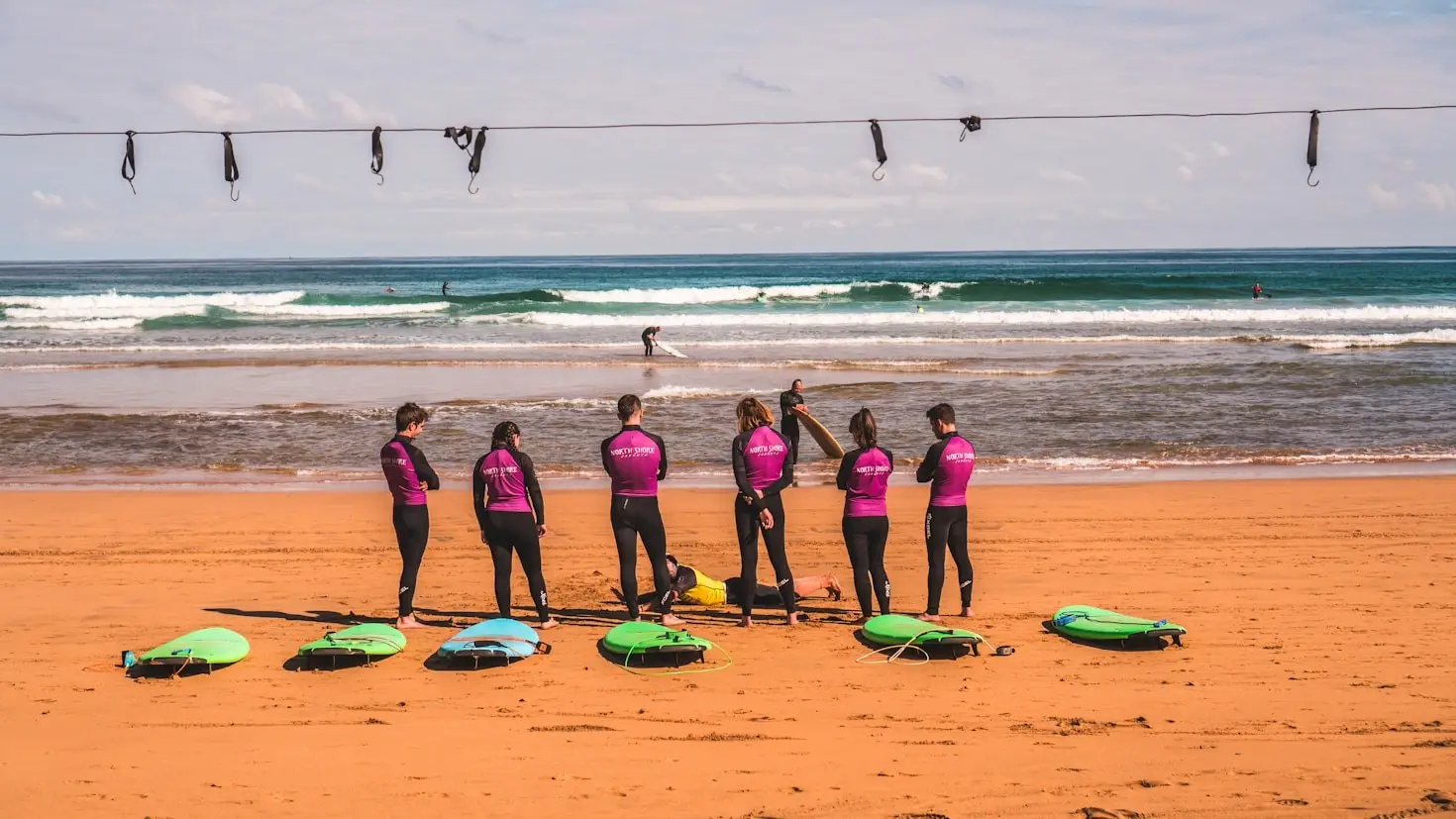
Costa Rica is a popular place to learn to surf, and beginner lessons are widely available in destinations such as Playa Guiones, Tamarindo, Jacó, and other established beach towns.
A typical beginner lesson starts with basic instruction on the beach before moving into the water. Instructors generally cover paddling, positioning, standing up, basic surf etiquette, and how to recognize safer areas to enter and exit the ocean.
If you are completely new to surfing, taking at least one lesson can be worthwhile even if you plan to practice independently afterward. Local instructors can also explain currents, tides, and conditions that may not be obvious when you first arrive at a beach.
Do not choose a surf school based only on price. Look for experienced instructors, appropriate equipment, manageable group sizes, and a clear focus on safety.
The best instructors will also choose the lesson location and time according to current conditions rather than automatically taking beginners into the water at the same place every day.
If you already have some experience, explain your ability honestly before booking. An intermediate surfer looking to improve turns, positioning, or wave selection needs a different type of coaching than someone standing on a board for the first time.
Board rentals are easy to find in most major Costa Rica surf towns. Shops commonly offer soft-top beginner boards as well as a selection of longboards, funboards, and performance-oriented boards.
Renting is particularly convenient for shorter trips because it eliminates airline board fees and the hassle of transporting a large board bag between airports, hotels, and beaches.
Before leaving the shop, inspect the board and make sure any existing damage is noted. Check the leash and fins as well, and ask about the shop’s policy if the board is damaged while you are using it.
If you plan to surf for several days, ask about weekly or multi-day rates rather than paying for individual sessions. Longer rentals can offer better value and allow you to surf whenever conditions look good.
Some shops also allow surfers to exchange boards during the rental period. This can be useful in Costa Rica because conditions may change significantly during a trip. A larger board might make sense on a smaller morning, while a different setup may be more appropriate when the swell increases.
Experienced surfers often prefer the familiarity of their own equipment. If you know exactly what you like to ride and surfing is the main purpose of the trip, bringing your own board can make sense.
The downside is transportation. Airlines have different rules and fees for surfboards, and those policies can change. Board bags also take up considerable space in rental vehicles and can make transfers between destinations more complicated.
Before booking a flight, check the airline’s current sporting-equipment policy, including maximum dimensions, weight limits, number of boards allowed in one bag, and any additional fees.
If you decide to bring your own equipment, use a well-padded travel bag rather than a lightweight day bag. Extra padding around the nose, tail, and rails can help protect the board during baggage handling.
Remove or protect removable fins when appropriate and avoid packing hard objects where they can press directly against the board. After arriving, inspect your equipment before leaving the airport so any obvious transportation damage can be addressed as soon as possible.
Think about board transportation when planning the rest of your trip. If you are renting a car, confirm that your equipment will fit inside the vehicle or that boards can be transported safely using appropriate racks.
Travelers using shared shuttles, domestic flights, or other transportation should confirm surfboard policies in advance. Space can be limited, particularly on smaller vehicles and aircraft.
For beginners and travelers taking only a few surf sessions, renting is usually the simplest option. It provides access to appropriate equipment without adding another piece of oversized luggage to the trip.
For experienced surfers planning to spend most of their vacation in the water, bringing a familiar board may be worth the additional effort. Another option is to travel without equipment and rent a higher-performance board locally, which can provide a useful balance between convenience and board quality.
Whichever option you choose, arrange equipment around the type of trip you are actually planning. A simple rental may be perfect for a week in one beach town, while a dedicated surf trip across several regions may justify bringing equipment you already know and trust.
A Costa Rica surf trip can work with very different budgets. You can keep costs relatively low by staying in hostels, eating at local restaurants, renting a board, and using shared transportation, or spend considerably more on beachfront hotels, private transfers, rental cars, and upscale dining.
Your destination also matters. Popular towns such as Nosara, Santa Teresa, and Tamarindo can be more expensive than smaller coastal communities, particularly during the busiest travel periods. Accommodation is usually the biggest expense, followed by transportation and food.
Budget travelers can often reduce costs by choosing hostels, guesthouses, or simple rooms away from the beachfront. Mid-range travelers will find plenty of small hotels, boutique properties, and vacation rentals, while luxury resorts and high-end villas can push the cost of a trip much higher.
Prices can vary considerably by location and season, so it is better to compare several properties before deciding where to stay. If you are traveling during popular holiday periods or the dry season, booking earlier can provide a wider choice of accommodation.
Food costs depend heavily on where you eat. Local restaurants, often known as sodas, can be an affordable option for traditional Costa Rican meals, while restaurants in popular beach towns may charge prices closer to those found in major international tourist destinations.
Travelers staying in an apartment or vacation rental with a kitchen can reduce costs by preparing some meals themselves. A practical approach is to combine inexpensive local breakfasts and lunches with occasional dinners at beachfront or higher-end restaurants.
Transportation can become one of the larger expenses if you plan to explore several parts of the country. Rental-car costs include more than the advertised daily rate, so consider insurance, fuel, parking, and any additional fees when estimating your budget.
Shared shuttles can be economical for travelers moving between a small number of destinations, while private transfers offer greater convenience at a higher price. Public buses are generally the cheapest option but require more time and flexibility.
Renting a surfboard locally can be cheaper and easier than paying airline fees to transport your own equipment, particularly on a short trip. Rental prices vary according to the type of board, location, and length of the rental.
If you plan to surf every day, ask about multi-day or weekly rates. Some rental shops may also allow you to change boards as conditions change, which can add value compared with paying for individual daily rentals.
Surf lessons add to the cost of a trip but can be worthwhile for beginners. Group lessons are typically less expensive than private instruction, while multi-day packages may provide better value for travelers who want to make surfing a major part of their vacation.
More experienced surfers can also find private coaching and guided surf sessions, although these generally cost more than standard beginner lessons.
It is worth leaving some room in the budget for activities away from the beach. National parks, wildlife tours, waterfalls, fishing trips, snorkeling, ziplining, yoga classes, and other excursions can quickly add to the total cost of a vacation.
You do not need to book an activity every day. Costa Rica’s beaches, towns, and natural surroundings provide plenty to explore without filling the entire itinerary with paid tours.
A budget-focused surf trip usually means simple accommodation, local food, board rentals, and limited private transportation. Staying in one surf town rather than constantly moving between destinations can also keep costs under control.
A mid-range trip provides more flexibility for private rooms, a rental car or occasional transfers, regular restaurant meals, and a few organized activities. This is often a comfortable balance for travelers who want convenience without turning the trip into a luxury vacation.
At the higher end, beachfront hotels, private transfers, premium rental vehicles, private surf coaching, upscale restaurants, and organized excursions can make Costa Rica considerably more expensive.
One of the easiest ways to control costs is to slow down. Choose one or two well-positioned destinations instead of trying to visit every surf town on the coast. This reduces transportation expenses and gives you more time to actually enjoy each place.
Traveling outside the busiest periods, comparing accommodation before booking, eating at local restaurants, and renting surf equipment for several days at a time can also help reduce the overall cost.
Most importantly, build your budget around the type of experience you want. If surfing is the priority, spending more on a convenient location close to the waves may be more valuable than paying for a luxury room or an itinerary packed with tours.
Packing for a Costa Rica surf trip is relatively simple. Warm water means you can leave the heavy wetsuit at home in most situations, while lightweight clothing and good sun protection will cover much of what you need away from the waves.
The exact packing list depends on the season, destination, and whether you plan to bring your own surf equipment. A trip during the green season requires a little more preparation for rain, while travelers moving between several regions may want to pack lighter and keep luggage easy to transport.
If you are bringing your own board, pack it in a well-padded travel bag and bring the fins, fin key, leash, and any other equipment specific to your setup. A spare leash can be useful on a longer surf trip, especially if you plan to visit areas where surf shops are less common.
Surfers renting equipment locally can travel much lighter. A good rash guard, surf shorts or swimsuit, and a small amount of personal surf gear may be all you need.
The tropical sun can be intense, and several hours in the water can lead to sunburn surprisingly quickly. Pack water-resistant sunscreen suitable for extended outdoor use and reapply it regularly.
A hat, sunglasses, and lightweight long-sleeve clothing are useful away from the water. A long-sleeve rash guard can also provide additional protection during longer surf sessions.
Lightweight, breathable clothing works best for most coastal destinations. T-shirts, shorts, swimwear, sandals, and a few comfortable evening clothes will cover most situations in relaxed surf towns.
It is still worth bringing one light long-sleeve layer. Air-conditioned transportation and accommodation can feel surprisingly cool after spending the day outside, and higher-elevation destinations can be noticeably cooler than the coast.
If you are visiting during the green season, pack a lightweight waterproof jacket or compact rain shell. Heavy tropical showers can arrive quickly even after a sunny morning.
A waterproof bag or dry bag can also be useful for protecting your phone, wallet, camera, and other electronics during boat trips, beach days, or sudden rain.
Sandals or flip-flops are enough for many days around the beach, but bring a comfortable pair of walking shoes if you plan to explore national parks, waterfalls, towns, or hiking trails.
For more adventurous activities, footwear with good grip is more useful than fashionable shoes. Trails can become muddy and slippery during the rainy season.
A reusable water bottle is useful for long beach days, road trips, and outdoor activities. Staying hydrated is particularly important when combining tropical heat with several hours of surfing.
If you are heading somewhere remote, fill up before leaving town rather than assuming drinking water or shops will be available at every beach.
Mosquitoes and other insects are part of traveling in a tropical environment, particularly around vegetation and during wetter periods. Packing insect repellent can make evenings and trips into more humid areas considerably more comfortable.
Lightweight long sleeves and pants can provide additional protection when spending time around rainforest, rivers, or heavily vegetated areas.
Bring the usual travel essentials such as your phone, charging cables, identification, payment cards, and copies of important travel documents. A portable power bank can be useful on long travel days or when exploring away from your accommodation.
If you plan to work remotely or carry expensive electronics, consider how you will secure them when you are at the beach. Avoid leaving valuable equipment visible inside a parked vehicle.
It is easy to overpack for Costa Rica. Most surf towns are casual, and laundry services are widely available in popular travel areas. Packing less makes moving between destinations considerably easier, particularly when using shuttles or smaller vehicles.
Bring the equipment and clothing you know you will use, leave some extra space in your luggage, and remember that basic supplies can usually be purchased after you arrive.
Costa Rica offers waves for almost every experience level, but ocean conditions can change quickly. A beach that looks approachable from shore may have strong currents, larger sets, rocks, or other hazards that are not immediately obvious.
Taking a few basic precautions can make your surf trip safer and more enjoyable, particularly when visiting a break for the first time.
Before entering the water, spend a few minutes watching the surf. Pay attention to where other surfers are entering and exiting, where waves are breaking, and whether there are visible currents or obstacles.
Surf forecasts can help you understand swell size, direction, wind, and tides, but they should not replace what you see at the beach. Conditions can vary significantly between nearby breaks and can change throughout the day.
Rip currents can occur at many beaches and may be difficult to recognize if you are unfamiliar with the area. Look for channels of water moving away from shore, differences in wave patterns, or areas where the surface appears unusually disturbed.
If you are caught in a strong current, avoid exhausting yourself by fighting directly against it. Stay calm, conserve energy, and move parallel to the shoreline when possible until you are clear of the strongest flow before working your way back toward the beach.
One of the easiest ways to avoid trouble is to choose waves that match your ability. Costa Rica has plenty of beginner-friendly conditions, but it also has powerful beach breaks, reef breaks, and point breaks intended for experienced surfers.
If the waves are significantly larger or more powerful than anything you have surfed before, there is nothing wrong with waiting for conditions to improve or finding another beach.
Local knowledge can be extremely valuable. Surf instructors, rental shops, and experienced local surfers often know how a particular break changes with the tide, swell direction, and season.
If you are unsure about rocks, currents, entry points, or other hazards, ask before paddling out. A short conversation can tell you more about a break than simply looking at a forecast.
Tides can dramatically change the character of some Costa Rica surf breaks. A spot that works well at one stage of the tide may become shallow, difficult, or unsuitable only a few hours later.
Check the local tide schedule and learn which tide works best for the break you plan to surf. This is especially important around reefs, rocks, and river mouths.
Sun exposure is easy to underestimate when you are spending several hours in the ocean. Use water-resistant sun protection, stay hydrated, and take breaks during long sessions.
The strongest part of the day can feel particularly intense on exposed beaches. Early-morning sessions often provide cooler temperatures and may also offer better wind conditions at many breaks.
Beach days create an obvious problem: you may be in the water while your belongings are on shore. Take only what you actually need and avoid leaving phones, wallets, passports, cameras, or other valuables unattended on the beach.
Similarly, do not leave valuable items visible inside a parked vehicle. Keep luggage and expensive equipment out of sight whenever possible, particularly when stopping at beaches during a road trip.
Some surf breaks are located near river mouths. Conditions around these areas can change after heavy rain, and currents may be stronger than they appear.
Costa Rica is also home to crocodiles, and they can occur in rivers, estuaries, and some coastal areas. Pay attention to local warnings and signs, and avoid entering unfamiliar rivers or estuaries simply to reach a surf break.
Popular breaks can become crowded, particularly during good conditions. Basic surf etiquette helps keep the lineup safer and more enjoyable for everyone.
Do not intentionally drop in on another surfer, avoid paddling directly into the path of someone riding a wave, and take time to understand how the lineup works before competing for waves. Respect local surfers and remember that you are a visitor in their community.
Surfing and other outdoor activities come with some risk, so it is worth checking what your travel insurance actually covers before your trip. Policies differ, and some may have exclusions or additional requirements for surfing and other adventure activities.
Read the policy rather than assuming that every activity is automatically covered, especially if you plan to surf larger waves or participate in additional activities such as diving, fishing, or adventure tours.
You do not need to paddle out immediately after arriving at a new beach. Watch a few sets, notice where experienced surfers sit, identify entry and exit points, and see how conditions change.
A little patience is especially useful when traveling. Costa Rica has enough surf that missing one session is rarely worth taking unnecessary risks in conditions you do not understand.
Surfing may be the reason you start planning a trip to Costa Rica, but it does not have to fill every day of your itinerary. The country combines beaches with rainforest, wildlife, volcanoes, waterfalls, national parks, and small coastal communities, making it easy to build a much broader trip around a few days in the water.
Leaving some time away from the surf is also useful when conditions are not cooperating. A windy afternoon or smaller day can become an opportunity to explore somewhere you might otherwise have missed.
Not every beach needs to have perfect waves. Some of Costa Rica’s most enjoyable coastal stops are better suited to swimming, walking, watching the sunset, or simply spending a quiet afternoon away from busier surf breaks.
If you have a rental car, exploring nearby beaches can be one of the easiest ways to add variety to a surf trip. A short drive from a popular surf town can often lead to a completely different stretch of coastline.
Costa Rica is famous for its biodiversity, and protected areas provide opportunities to see tropical forests and wildlife beyond the beach. Depending on where you are staying, a national park or wildlife reserve may be close enough for a half-day or full-day trip.
Monkeys, sloths, tropical birds, reptiles, and other wildlife are among the animals travelers hope to encounter, although sightings are never guaranteed. Guided walks can be worthwhile because experienced guides are often able to spot animals that visitors would otherwise walk straight past.
Waterfalls make an easy addition to many Costa Rica road trips. Some are close to popular coastal destinations, while others require a hike or a drive into the interior.
Access conditions can change with the season, particularly after heavy rain, so check current information before visiting more remote locations. Good footwear can also make a major difference on wet or muddy trails.
Hiking offers a completely different perspective on Costa Rica’s landscape. Coastal trails, rainforest paths, volcanic regions, and mountain areas can all be incorporated into a longer itinerary.
If you are spending most mornings surfing, an easy afternoon walk may be more realistic than planning a demanding hike every day. Save longer excursions for rest days when your shoulders and legs could use some time away from the board.
Trying local food is one of the simplest ways to experience more of Costa Rica without adding another major activity to your itinerary. Small local restaurants known as sodas are good places to look for traditional meals and everyday Costa Rican cooking.
Beach towns also offer an increasingly diverse restaurant scene, particularly in destinations popular with international travelers. You can easily alternate between inexpensive local meals, fresh seafood, casual cafés, and more upscale restaurants during the same trip.
Costa Rica’s long coastline makes fishing and boat trips another popular way to spend time on the water. Options vary by region and can include sport fishing, snorkeling trips, wildlife excursions, and sunset cruises.
If you are traveling with friends or family members who do not surf, a boat trip can also provide a shared activity on a day when part of the group would otherwise be heading to the waves.
Surfing and wellness have become closely connected in several Costa Rica beach communities. Nosara in particular is well known for yoga and wellness-focused travel, but classes, massages, and similar services can be found in many popular coastal towns.
A yoga session or massage can also feel particularly welcome after several consecutive days of paddling and surfing.
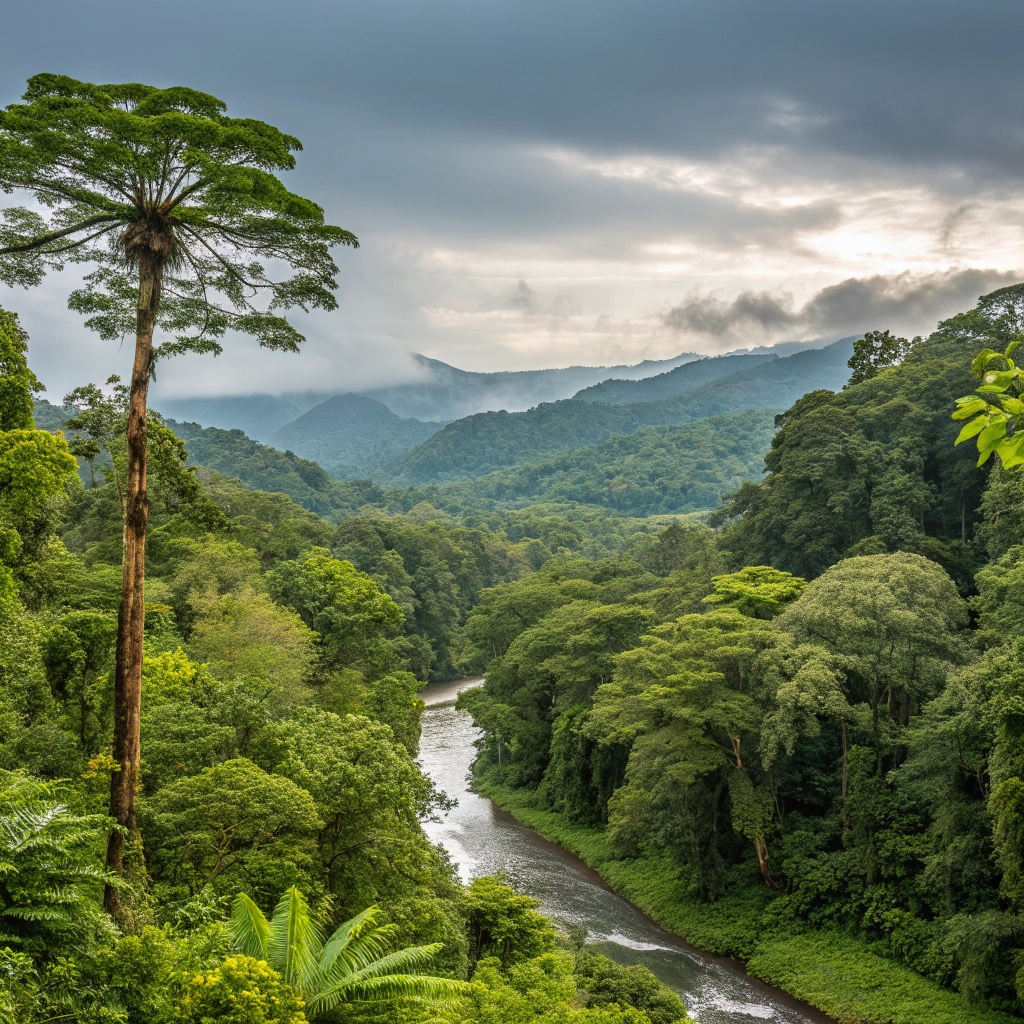
One of the advantages of traveling in Costa Rica is how quickly the landscape can change once you leave the beach. In some parts of the country, dense tropical forest begins only a short distance from the coastline.
Travelers heading toward the Southern Pacific and Osa Peninsula can experience particularly wild landscapes, while other regions offer easier rainforest excursions that can be combined with a beach-based itinerary.
If you have enough time, combining surfing with a road trip is one of the best ways to experience different parts of the country. Rather than trying to visit every famous destination, choose a route that connects a few regions naturally.
You might combine several Pacific surf towns, spend part of the trip inland, or build an itinerary around beaches and national parks. Leaving some flexibility in the schedule makes it easier to stay longer somewhere you enjoy or change plans when surf conditions improve.
Some of the best Costa Rica trips are not built around a rigid list of attractions. Surf early, stop somewhere unexpected during a drive, try a local restaurant, spend an afternoon watching wildlife, or simply stay at the beach until sunset.
That balance is part of what makes Costa Rica work so well as a surf destination. Even when the waves are the main reason for coming, there is enough to see and do that the trip does not depend on perfect surf every day.
Costa Rica makes it easy to build a trip around the ocean without making surfing the only reason to visit. With warm water, a wide variety of breaks, lively beach towns, tropical landscapes, and plenty to explore away from the coast, the country works just as well for a dedicated surf trip as it does for a broader adventure.
Start by choosing the region that best matches your surfing level and the type of trip you want. From there, consider the season, airport, transportation, accommodation, and how much time you realistically want to spend moving between destinations.
First-time visitors may prefer to settle into one or two well-established beach towns, while longer trips provide an opportunity to explore different parts of the Pacific coast or combine surfing with national parks, wildlife, waterfalls, and inland destinations.
This guide is only the starting point. Surf O Costa Rica covers surf breaks, beaches, destinations, places to stay, transportation, travel planning, and experiences throughout the country.
Explore our latest Costa Rica guides to find the places that fit your trip, learn more about individual surf towns, and start building an itinerary at your own pace.
Whether you are coming for your first lesson, searching for better waves, or simply looking for a few days by the Pacific, leave some room in your plans for the unexpected. In Costa Rica, some of the best parts of a trip are often the ones you did not schedule.