Playa Guiones Surf Guide: Waves, Conditions & Tips for Beginners
Planning to surf Playa Guiones in Nosara? Here is what to know about the beach break, seasonal swells, beginner-friendly conditions, equipment, safety and planning your first session.
What makes Playa Guiones special?
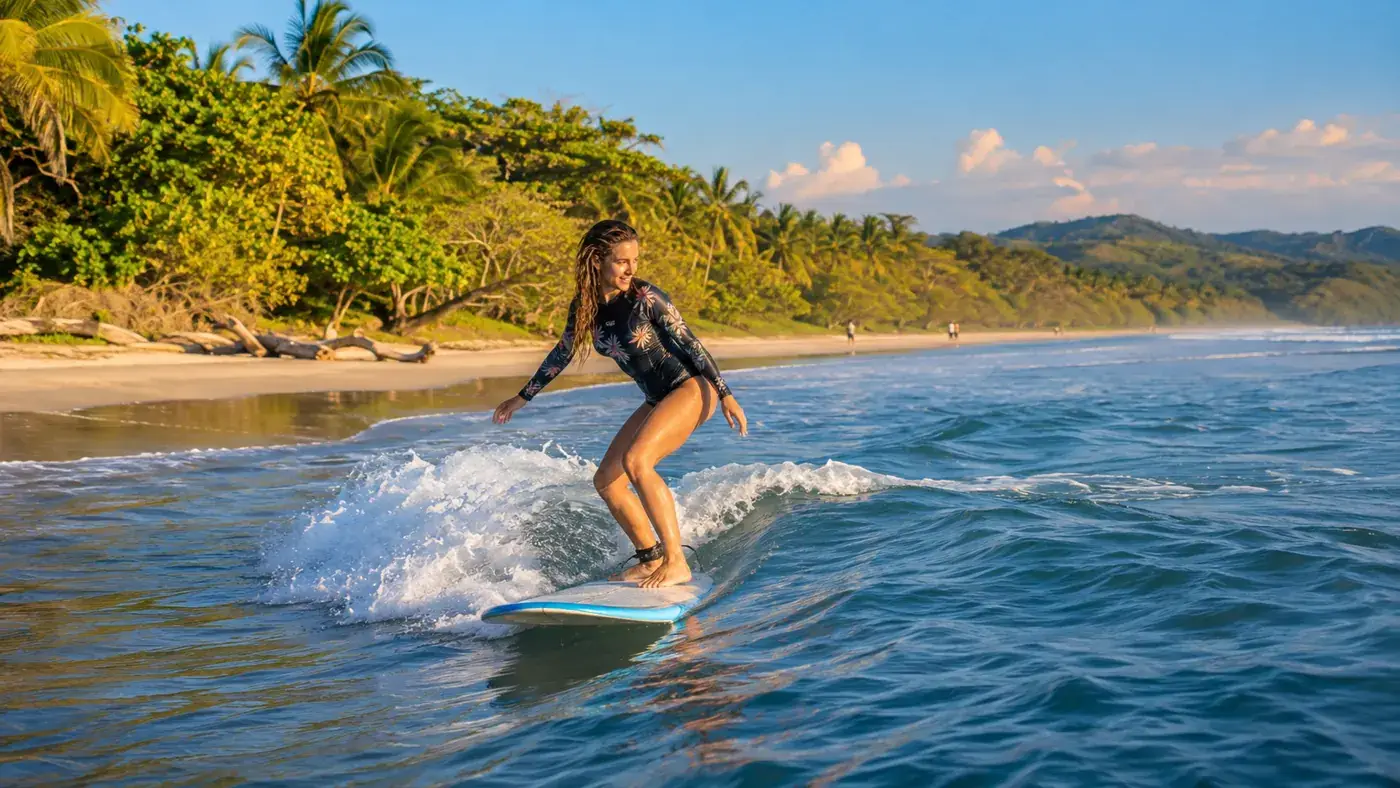
Playa Guiones is the long, open Pacific beach most visitors mean when they talk about surfing in Nosara, Costa Rica. Instead of one narrow takeoff zone, its sandy coastline offers multiple peaks that shift with swell, tide and sand movement. That variety is a big part of the appeal: on a mellow day, first-timers can practice in whitewater while more experienced surfers look for unbroken waves farther outside.
It is also an exposed beach break. That means the ocean can change quickly, and “beginner-friendly” never means safe in every condition. Check the surf and speak with a local instructor before paddling out, especially on your first visit.
Playa Guiones waves and surf conditions
The waves at Guiones break over sand rather than a fixed reef. Peaks can appear at different points along the beach, and the best-looking section one morning may be less organized the next. On smaller days, waves can be forgiving enough for lessons; when a stronger swell arrives, the same beach can produce powerful surf, difficult paddles and strong currents.
Wave type
Beach break with shifting left- and right-breaking waves. The sandbars are not permanent, so there is no single guaranteed “best peak.”
Best wind to look for
Light or offshore winds often create cleaner wave faces. Early mornings are frequently worth checking, but conditions vary by day and season; afternoons are not automatically unsurfable.
Tide considerations
There is no universal perfect tide for the entire beach. Different sandbars may work at different water levels, and a tide that suits an experienced surfer may not suit a beginner. Ask a local surf school which area and tide window are appropriate that day.
Surf size
Small, manageable surf is usually preferable for first lessons. During large swells, Guiones may be unsuitable for beginners even if lessons were possible the previous day.
Is Playa Guiones good for beginners?
Yes, in the right conditions. The sandy bottom, multiple wave zones and established lesson scene make Guiones a popular place to learn. But the beach is open to Pacific swell, so beginners should not assume every day is a lesson day.
- True first-timers: start with an instructor in an appropriate whitewater area, away from crowded takeoff zones.
- Developing beginners: focus on paddling, positioning, turning and reading the ocean before chasing bigger outside waves.
- Intermediate surfers: explore different peaks only after checking the currents, crowd and forecast.
A lesson can be valuable even if you have surfed before: a local instructor can help you choose a suitable section of beach for that day's conditions.
Best time of year to surf Playa Guiones
Nosara has surf throughout the year, but the character of the waves changes with seasonal swell and weather patterns. The dry season, broadly December through April, often brings sunnier conditions and can offer smaller, cleaner sessions. The green season, broadly May through November, frequently sees more consistent and sometimes larger south and southwest swells, along with rain and variable winds.
Neither season guarantees a particular wave size. A beginner can encounter difficult surf in the dry season, while a calm green-season morning may be excellent for learning. For a fuller month-by-month comparison, read our best time to surf in Nosara guide.
Best time of day and how to plan a session
Many surfers check Guiones early, when winds may be lighter and the beach is less hot. Yet the right session is the one where wind, tide, swell and your skill level line up—not simply the earliest session.
- Check a current surf forecast for swell height, period, direction, wind and tides.
- Look at the ocean from shore for several minutes. Watch how often larger sets arrive.
- Identify the entry and exit point and any visible currents.
- Ask an instructor or experienced local surfer whether your intended area suits your ability.
- Reassess if the conditions change while you are in the water.
What board should you ride?
For most first-time surfers, a stable soft-top longboard makes catching waves and practicing pop-ups easier. Your ideal size depends on your weight, fitness, balance and the conditions. Rental shops and instructors can help match a board to you.
Bring a properly fitted leash, surf-safe sun protection, drinking water and a rash guard if you are spending time in the tropical sun. Never rely on a leash as a flotation or rescue device.
Safety, currents and surf etiquette
Even with a sandy bottom, ocean hazards are real. Rip currents, powerful shorebreak, collisions and exhaustion can affect surfers of every level. Avoid surfing alone, never enter the water if you are unsure about the conditions, and follow advice from qualified local instructors or lifeguards where present.
- Rip currents: if caught in one, stay calm, avoid fighting directly against the flow, and seek help. Swim parallel to shore when able to escape the current, then return toward shore when safe.
- Right of way: generally, the surfer closest to the breaking part of the wave has priority. Do not drop in on another rider.
- Board control: keep hold of your board whenever possible and maintain distance from others.
- Crowds: avoid practicing in the middle of a busy lineup.
- Wildlife and weather: leave marine animals alone and get out of the water if thunderstorms approach.
Surf lessons and rentals in Nosara
Nosara has numerous surf schools, private instructors and rental options near Playa Guiones. If you are new to surfing, prioritize instructors who assess ocean conditions before a lesson, explain currents and etiquette, and use appropriate equipment. Ask about group size, safety procedures, lesson duration and whether the board is included.
Rental availability and prices change, so compare current local options rather than relying on an old published rate. If conditions are too big, a reputable instructor should be willing to change the plan.
Getting to Playa Guiones and beach practicalities
Playa Guiones is in the Nosara area of Guanacaste on Costa Rica's Nicoya Peninsula. Access is typically through the Guiones neighborhood and public paths leading to the beach. Road conditions can change with rain, so allow extra time when traveling from elsewhere on the peninsula.
Bring water, sun protection and a secure place for your belongings. Do not leave valuables unattended on the sand or visible inside a parked vehicle. Respect protected coastal vegetation, wildlife and posted access rules.
Looking for a broader itinerary? Explore our Costa Rica surf guide and our ideas for things to do in Costa Rica besides surfing.
Playa Guiones surfing FAQ
Can complete beginners surf at Playa Guiones?
Yes, when waves and currents are manageable and they are learning in a suitable area, ideally with an instructor. Larger swell days may not be appropriate.
Is Playa Guiones a reef break?
No. It is primarily a sandy beach break, with shifting peaks that change as the sandbars and swell change.
When is the best time to surf Playa Guiones?
Often early morning when winds are lighter, but the best session depends on the day's swell, wind, tide and your experience.
Can you surf Playa Guiones year-round?
Surf is possible throughout the year, although conditions vary substantially by season and from day to day.
Do I need a surf lesson?
A lesson is strongly recommended for first-timers and useful for visitors unfamiliar with local currents, changing sandbars and crowded lineups.
Final tip: Playa Guiones can be an excellent place to learn and progress, but it rewards patience. Watch the ocean, choose the right wave size for your ability, and never hesitate to sit out a difficult day.